Video Library and Short Essays

For Family and Romantic Partners

When a loved-one has traits of Borderline Personality

Monday, May 6, 2013

What Does Recovery Look Like?


Trying to determine if someone in your life suffers from Borderline Personality Disorder and what can be done about it? You will soon find out that this is a complex question.

When in the midst of a relationship with the person who may be suffering from Borderline Personality Disorder, it can feel like there are more questions then there are answers.

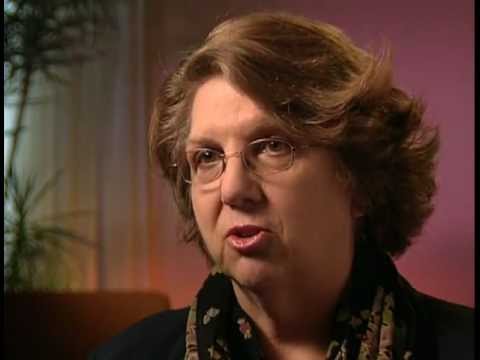
This documentary video takes an in-depth look at the disorder. It not only includes three individual sufferers perspective, including Kiera Van Gelder author of The Buddha and the Borderline, but also from their family members as well. They discuss an array of issues including the confusion within the symptoms, angry outbursts, isolation, cutting, suicidal ideation, self destructiveness, and the misconceptions surrounding the behaviors in response to the intense emotions. 

The documentary also features leading experts in the field of Borderline Personality Disorder, Dr. John Gunderson, Dr. Marsha Linehan, and Dr. Perry Hoffman, discussing behaviors, clinical diagnosis, and treatments. Their commentary bringing a greater understanding of the disorder but also a message of hope. There is treatment. There are tools out there for family members. There are answers and solutions. The first step is knowing that what is going on in a Borderline Personality Disorder sufferer's mind and how they are acting can be two entirely different things.  There are no simple behavioral checklists; no definitive tests. Identifying Borderline Personality Disorder requires having a working knowledge of the disorder and some insight into the past life of the person in question.

Borderline Personality Disorder is a disorder of the emotions. Imagine a person who is extremely sensitive to rejection (fearful of even perceived or anticipated rejection) and has a limited ability to regulate their emotional impulses (love, fear, anger, grief, etc.). To protect themselves from their own feelings, they are prone to adopt a multitude of dysfunctional rationalizations and cover-ups.

For example, a person suffering from BPD may so fear rejection in a new relationship that they recreate themselves in the image of a person they believe would be lovable. When the negative emotions for making such a sacrifice surface - and not having the ability to modulate them, they lash out at the target of their affections for "making them do it" - rather than face their own feelings of inadequacy / fear of rejection, ultimately damaging the relationship they so fear losing, and reinforcing their feelings of inadequacy / fear of rejection.

For more information or to register, please click here. www.bpdfamily.com

Author: DreamGirl

Monday, February 4, 2013

Adolescence and Borderline Personality


What is the difference between otherwise normal adolescence behavior and adolescence behavior associated with Borderline Personality Disorder?

Borderline Personality Disorder is not often diagnosed in adolescence, however adult patients with this diagnosis often explain that symptoms began in early childhood. 

The behavior can include extreme sexual activity, utilizing drugs, engaging in impulsive and risky activities (i.e. driving too fast, stealing) – according to Dr. Blaise Aguirre the difference lies in the functionality of the behavior, being that the function of one is typical and the other’s function is mostly to help regulate the emotion(s) of the child in the moment [suffering from BPD].

Blaisse Aguirre, M.D.,  discusses in this video how to recognize the difference and how to better understand the purpose behind it.  He addresses in depth the criteria needed to diagnose BPD according to the current DSM and uses specific examples for younger children that gives a better understanding to the behavior that leads to diagnosis. It is a must see for any parent or family member who  is raising a child who may (or may not be) suffering from BPD.

 Dr. Aguirre is an expert in child, adolescent and adult psychotherapy, including dialectical behavior therapy (DBT), and psychopharmacology. He is the founding medical director of 3East at Harvard - affiliated McLean Hospital, a unique, residential DBT program for young women exhibiting self-endangering behaviors and borderline personality traits (BPD). Dr. Aguirre has been a staff psychiatrist at McLean since 2000 and is nationally and internationally recognized for his extensive work in the treatment of mood and personality disorders in adolescents. He lectures regularly in Europe, Africa and The Middle East on BPD and DBT.

Author: DreamGirl

Monday, January 7, 2013

Avoid Creating an Invalidating Home


In his talk on October 18, 2008 in Minneapolis, MN, Alan Fruzzetti, Ph.D. explores what it means to give someone a validating response rather than an invalidating response and how validating responses can be used to help a person with high levels of emotional arousal more constructively process their feelings, emotional dysregulation or personal chaos.

In this video, Dr. Fruzzetti explains the fine art of "validating" and shows us how easy it is to be invalidating.  He explains that invalidation is not necessarily abusive, mean, neglectful, uncaring or dyfunctional - it can be caring and well intended - but painful nonetheless. 

Dr. Fruzzetti recommends that families of a person with BPD also be in therapy as (1) it’s very stressful to have a loved one in emotional chaos and (2) it benefits the person with BPD when the family is part of the solution.

Alan E. Fruzzetti, Ph.D. is associate professor of psychology and director of the DBT Therapy and Research Program at the University of Nevada and Research Advisor Member of the Board of Directors of the National Education Alliance for Borderline Personality Disorder (NEA-BPD). 

Author: Vivekananda

Monday, September 10, 2012

Does the expression "Dr. Jekyll and Mr. Hyde" remind you of your spouse or partner?

 
A member at BPDfamily.com , writes: "I thought I was with Dr. Jekyll and Mr. Hyde."  In the 1931 film adaptation, of Robert Louis Stevenson's novel, Strange Case of Dr Jekyll and Mr Hyde, Dr. Jekyll believes good and evil exist in everyone. Experiments reveal his evil side, named Hyde. Experience teaches him how to hide how evil "Hyde" can be.

Does the expression "Dr. Jekyll and Mr. Hyde" remind you of your spouse or partner, too?  Have you ever thought that they were two different people - one minute they are the greatest, most kind and affectionate partner, and then suddenly an awful, mean, frightening person?

How could someone so good, turn around and become so bad, then flip back to again? You may be dealing with someone with a personality disorder or a mood disorder like Borderline personality disorder (BPD).

Borderline personality disorder is also known as Emotional Dysregulation Disorder, and is often misdiagnosed as Bipolar disorder, depression, or Post Traumatic Stress Disorder.  For example a study by researchers at the University of North Texas and Brown University found that nearly 40% of people with BPD in the study sample had previously received a misdiagnosis of bipolar disorder.  

I Hate You, Don't Leave Me

"I hate you, don't leave me", the title of Jerold Kreisman's (MD) 1991 book describing Borderline personality disorder has become a a widely accepted short description of the disorder.  What to know more?  Take a look at this video on the symptoms of the symptoms of Borderline personality disorder.

The BPDfamily.com site contain many articles and information about both Borderline Personality Disorder and Narcissistic Personality Disorder and has members available 24 a day to answer your questions.  If you are struggling with a Dr. Jekyll/Mr. Hyde relationship, BPDfamily may be a good resource for you.